15 Units | Van Nuys | Estate Portfolio Complete
Considering selling? Get a complimentary, confidential valuation.
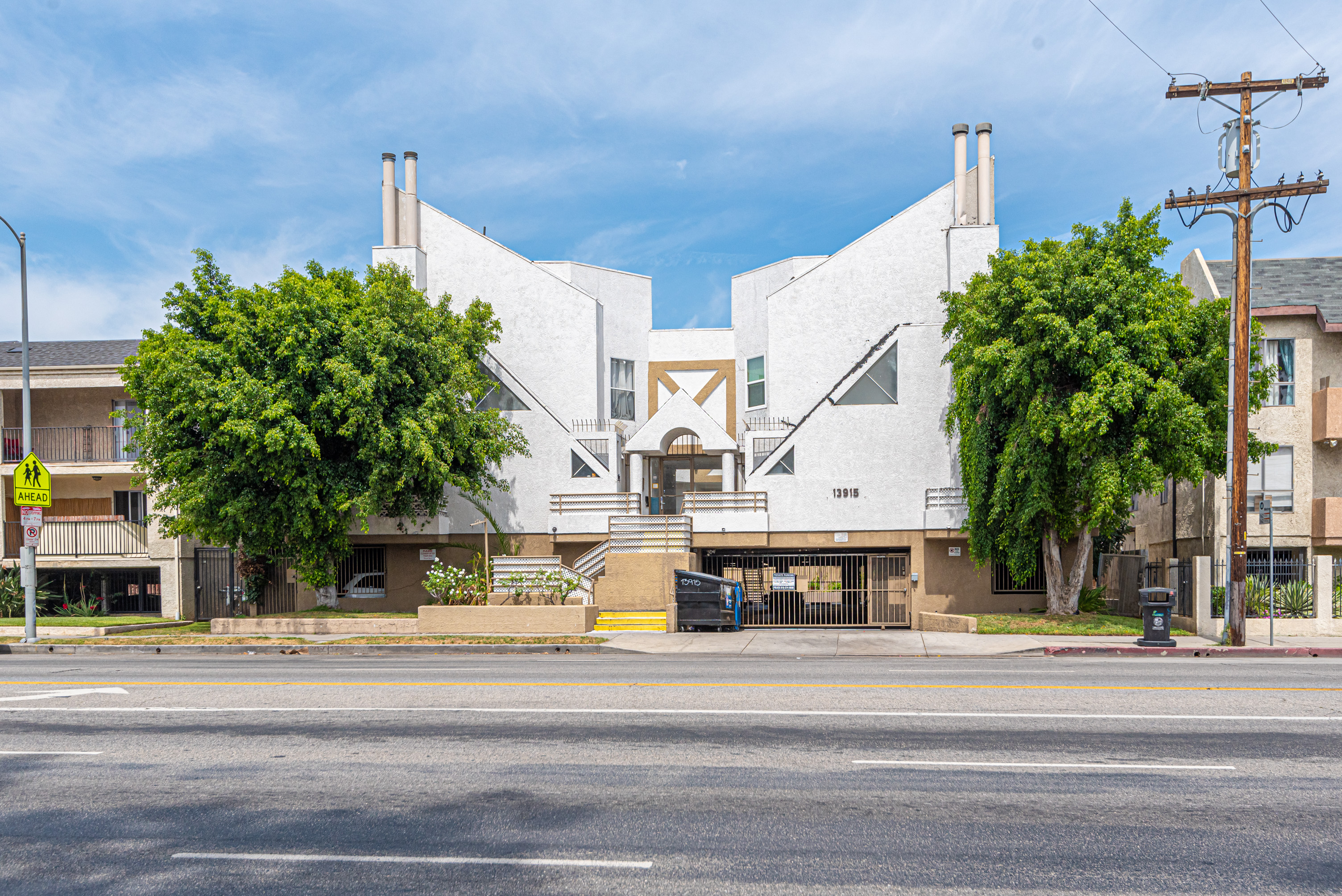
The LAAA Team of Marcus & Millichap is proud to announce the successful closing of 13915 Sherman Way, a 15-unit townhouse-style apartment community in Van Nuys, which sold for $3,400,000 and recorded on August 28, 2026. Our team represented the seller and procured the buyer. The closing completes a three-building Van Nuys estate portfolio, 34 units in all, sold across four months.
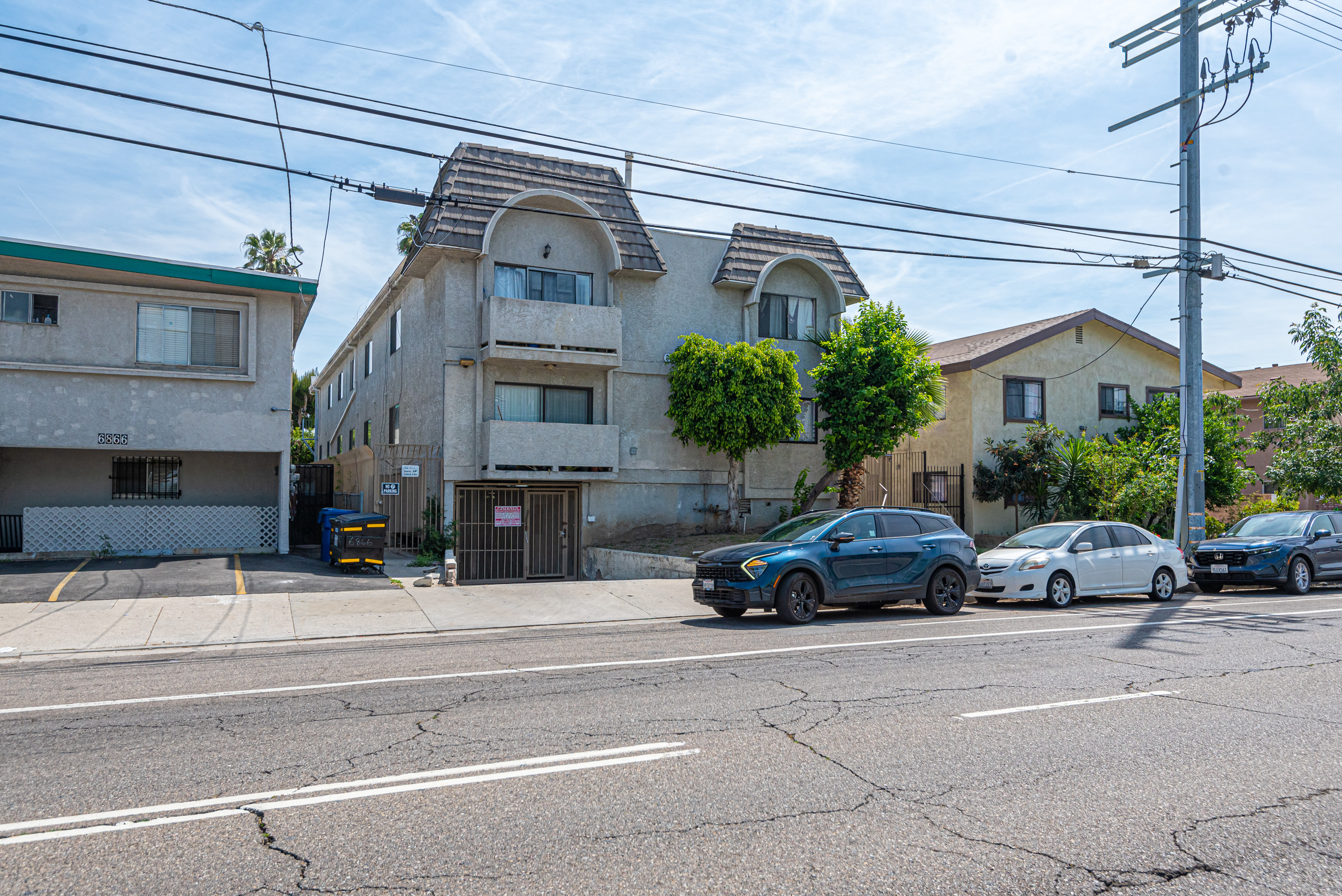
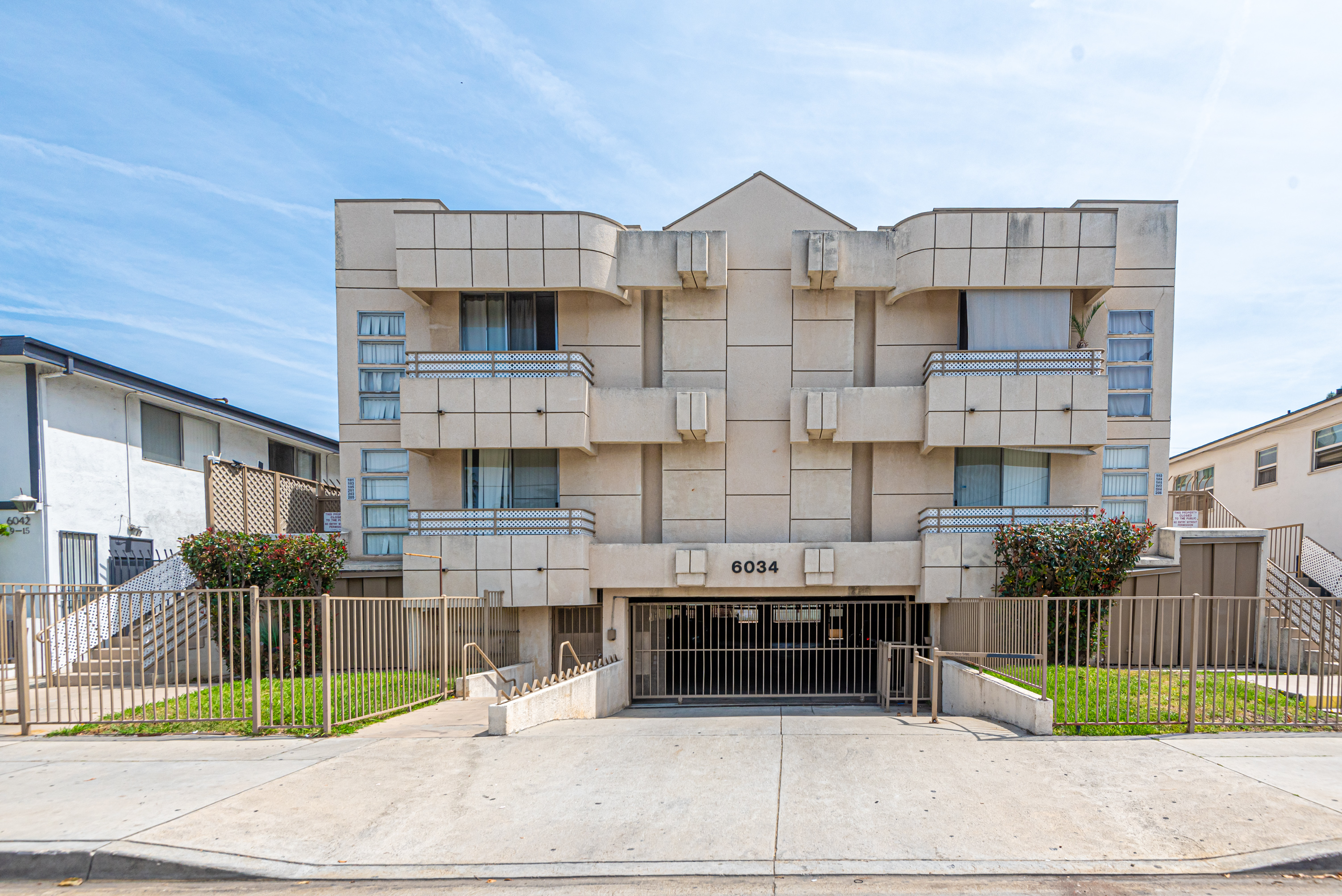
This building had not been offered for sale in more than 30 years. The seller was a family trust, and 13915 Sherman Way was the largest of three apartment buildings it held within a three-mile radius of one another, alongside 6034 Fulton Avenue and 6860 Woodley Avenue. Built in 1989 on the Sherman Way transit corridor, the property is unusual for the Valley in its unit mix. Twelve of the fifteen units are two-story townhomes of roughly 1,100 square feet with 2.5 bathrooms, and three are one-bedroom flats. A community pool, on-site laundry and a 28-space parking garage round out 16,144 rentable square feet on a 13,998 square foot lot. Because it was completed in 1989, the property sits outside the Los Angeles Rent Stabilization Ordinance and is governed only by California's AB 1482, so units reset at turnover without rent board oversight. The site carries TOC Tier 1 status, and the federally funded East San Fernando Valley Light Rail station is planned about half a mile east.
The first decision was how to sell it. Three buildings, three different sizes, one owner. We could have run three separate campaigns, or we could put the whole estate in front of the market at once as a single 34-unit Van Nuys offering and let buyers self-select into the piece they wanted. We chose the portfolio. It gave a 15-unit building the audience of a 34-unit one, and it let a buyer who came for Woodley discover Sherman Way on the same page.
Then we built it. The valuation went from first request to approved layout in twelve days, through two rounds of financial analysis. The offering memorandum followed over the next two weeks, again through two analysis revisions. We opened title with two companies inside a day of being awarded the listing so the preliminary report would be in a buyer's hands the moment one asked, and we had the due diligence index built and populated before the first email went out.
The first one that mattered on Sherman Way came in at $3,750,000, which was 95% of list and by a wide margin the strongest number in front of the seller. The terms were clean, we said so, and we recommended countering on price alone. The seller countered at $3,800,000 on April 30. The next day the buyer's partner reviewed the deal more closely and would not go above the low $3M range, and that buyer withdrew, including from his own original number. Two weeks later the same group returned at $3,500,000. The seller countered at $3,750,000, because that was where the price was about to move on market, and the group did not proceed.
On May 21 we reduced the price to $3,750,000 and put it back in front of the whole list. That single email reached 23,816 recipients, opened at 31.26%, drew 7,438 unique opens and 397 subscriber clicks, and produced 12 new investor registrations for the offering memorandum in the following 48 hours. Inside two weeks the seller had three new offers in hand rather than none.
Three offers is only useful if the seller can actually compare them, so we built the tools to do that. We put the offers side by side in a matrix showing price, deposit, investigation period, close of escrow, financing, proof of funds and who was asking the seller to pay a broker. Then we built a buyer qualification package, complete with proximity mapping and street-level views of each competing buyer's holdings, so the trust could weigh who was most likely to actually perform. What that work showed was that the highest price was the weakest offer: it carried a 30-day investigation period, a 75-day close, and an outside broker requesting compensation from the seller. The trust's advisor put the trade-off plainly. A 14-day contingency could outweigh a relatively small difference in price.
The seller issued a multiple counter offer to all three at $3,600,000, with a 14-day contingency period, a 60-day close, tenant estoppels on a best-efforts footing rather than as a condition of closing, and title and escrow at the seller's choice. One of the three buyers came back first. That buyer toured the property on June 3, walked one of the units, accepted every term the seller had sent, and moved only on price, coming up to $3,500,000. That left him under the seller's counter and still made him the highest number on the table, with the cleanest terms attached to it. The trust accepted on June 5, and escrow opened the same day.
Inspections changed the arithmetic once more. The general inspection and the retrofit review turned up enough work that the buyer asked for relief, and on June 18 and 19 the parties executed an amendment stepping the price down $100,000 to $3,400,000, a negotiated repair and retrofit concession rather than a second move on market price. Contingencies came off in the same 48 hours. The estoppels the seller had only promised on a best-efforts footing became the next job: we collected and executed all fifteen of them in eight days, between June 23 and June 30, which removed the single largest open question a lender or a buyer could still raise. The appraisal inspection was completed on June 26, and the 9A report and certificate of compliance were issued on June 30. The seller paid roughly $12,000 for the 9A work directly to the contractor rather than crediting it through escrow, which kept the closing statement clean and let the buyer schedule the work on his own timeline.
The last piece was a person, not a number. One of the residents was the building's longtime on-site manager, whose housing had been part of how he was paid. Turning that arrangement into an ordinary market lease without displacing him took a second amendment in late July, with the seller funding part of the transition at closing so he could stay on standard terms under a signed estoppel. The same amendment set the closing date and released a portion of the buyer's deposit to the seller as non-refundable.
The buyer's loan funded on August 27 and the deed recorded on August 28. The building was on the market 49 days before it went under contract, and escrow ran 84 days from acceptance to recording. The final price of $3,400,000 works out to $226,667 per unit and $210.60 per square foot, against in-place net operating income of $221,845 for a 6.52% cap rate and a 9.12 gross rent multiplier. In-place gross scheduled rent of $372,828 underwrites to $460,800 at market rents, roughly 23.6% of upside for the next owner to capture at turnover.
The useful lesson here is what a price reduction actually buys. The $200,000 cut did not simply lower the number. It reopened the file to buyers who had passed at $3,950,000, and because the list, the offering memorandum and the due diligence package were already built and waiting, the market could respond immediately: twelve new investors pulled the memorandum inside 48 hours, and three competing offers landed in under two weeks. Those three offers are what gave the seller a multiple counter and the room to hold every term while conceding on price. The buyer who won accepted every term the seller sent and moved only on price.