Twenty Units, Twenty Condos: A North Hills 1031 Closed in 93 Days
Considering selling? Get a complimentary, confidential valuation.
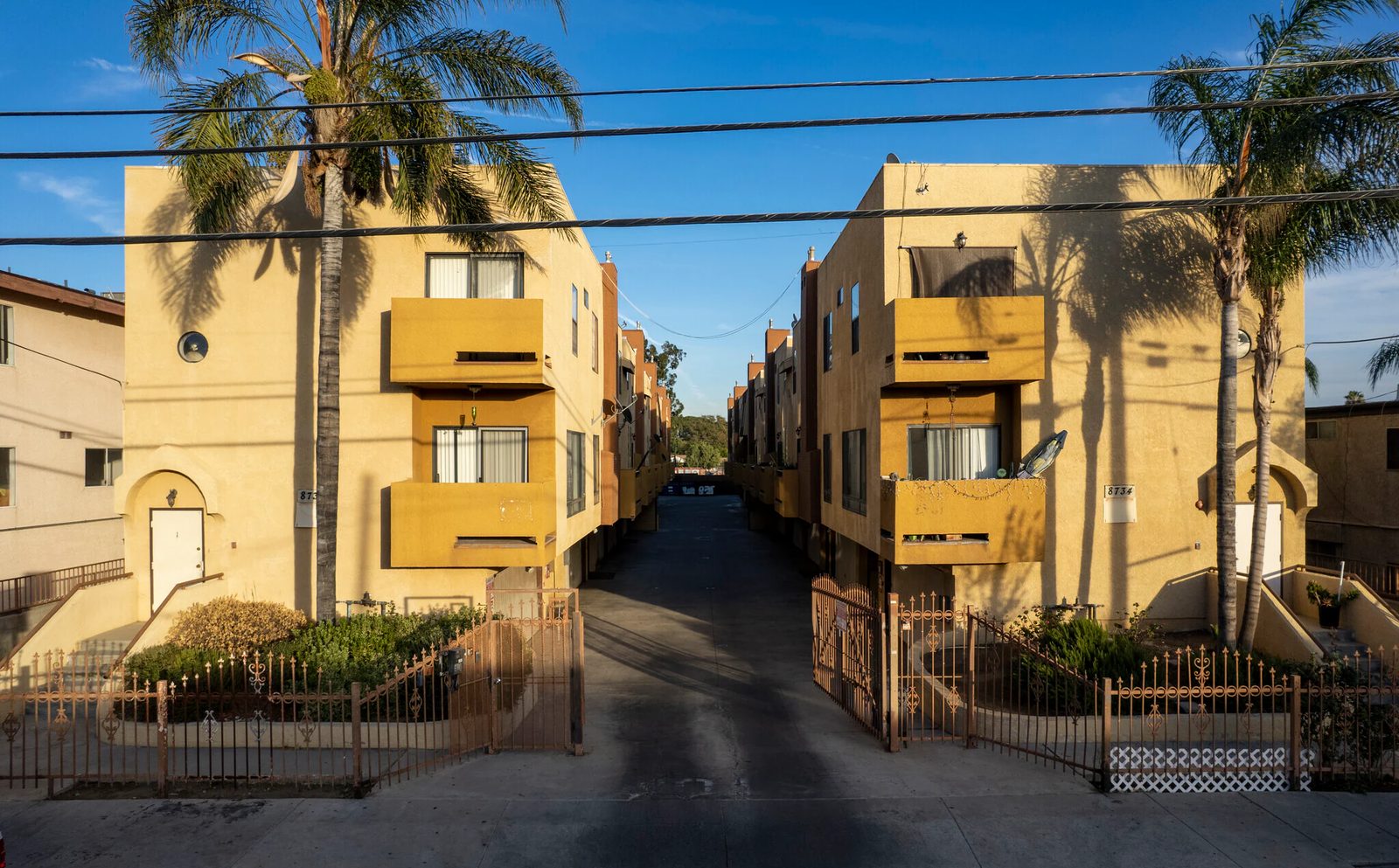
The LAAA Team of Marcus & Millichap is proud to announce the successful closing of 8734-8736 Burnet Avenue, a 20-unit townhome community in North Hills, which sold for $4,100,000. Our team represented the buyer.
This deal started with a relationship, not a listing agreement. The buyer is a family we have worked with for years, a well-established mom-and-pop ownership here in the Valley. We have closed half a dozen transactions together over our careers, and they have earned a reputation with us that money cannot buy: they close on time, they perform on their word, and they treat everyone in the deal right. So when Morgan Wetmore of our team came across this listing in May and realized what it actually was, they were the first call we made.
What it actually was took a minute to see. On the surface, this was a 1990-built rental property: two ten-unit buildings on a gated half-acre site, brought to market by an outside brokerage. But every one of the twenty units is a separately mapped, legally recorded condominium. Two of them had even sold individually as bank-owned condos back in 2009 and 2010. Most value-add buyers underwrite a building like this on rents alone. This one came with something an ordinary apartment building does not have: a finished condominium map and the built-in option, someday, to sell the units one at a time. The homes themselves back it up. Each is a tri-level townhome with 2.5 bathrooms, an attached two-car garage, and in-unit laundry, in a mix of twelve two-bedroom and eight three-bedroom floor plans totaling 24,060 square feet. Built in 1990, the property sits outside the City of Los Angeles Rent Stabilization Ordinance, governed only by California's statewide AB 1482. And it rents in a deep, durable pocket of the Valley, minutes from Cal State Northridge, Kaiser Permanente Panorama City, and the 405, 118, and 5 freeways.
The rent roll was the other half of the picture. Fifteen of the twenty homes were occupied, many by residents of eight or more years paying rents well below today's market. Two units carry Section 8 voucher income at rents above what the open market pays. Five units, all in one building, were vacant, which meant a buyer could start proving out market rents on day one instead of waiting years for turnover.
We were far from alone in seeing it. The listing drew more than a dozen offers. What won it was not the highest bid in a shootout; it was trust. Morgan worked the process directly with the listing broker and the seller, on the phone, question by question, until they were comfortable that our buyer was the one who would actually close. Other bidders fielded multiple rounds of non-binding counters. Our client received the single binding counteroffer. It came in above the asking price, and we advised our client to sign it anyway, because the numbers still made sense: $205,000 per unit and $170 per square foot for townhome product in a submarket where finished individual condominiums have been trading near $516,000. On in-place income the purchase penciled to a 6.57% cap rate and an 8.29 GRM, with stabilized operations penciling to $419,313 of net operating income, a 10.23% return on the same price.
The work between contract and closing is where the deal was earned. A 471-page inspection across all twenty units documented the deferred maintenance you would expect from a 35-year-old property under long-term ownership. We represented the buyer and only the buyer, and the assignment never changed: the best possible deal, closed in time for the exchange. A drawn-out repair negotiation would have threatened both, especially once the property passed to new hands within the seller's family mid-escrow and a successor trustee stepped into a transaction already in motion. So we negotiated a resolution that kept the contract on its original terms and its original calendar, with our client taking control of the remaining work after closing. It happened to work cleanly for the seller too, and that is the kind of deal we like being part of: one side of the table, fully represented, and everyone walking away happy.
Then came the quietest threat to the closing date. Because the property is twenty legal condominiums, the City of Los Angeles required twenty separate residential property reports for the transfer, and the City's processing queue was running longer than our closing calendar. Rather than let a municipal backlog push a 1031 exchange past its deadline, we worked with escrow and the listing broker to document our client's assumption of the City-required items after close, resolved a parallel LADWP water conservation certificate the same week on the same basis, and kept the recording date where it belonged.
The sale closed on August 18, 2026, 93 days from acceptance, completing our client's 1031 exchange on time.
Listing work is the core of our practice; we are sellers' agents first. But the market knowledge that comes from pricing and selling apartment buildings across the Valley every week is exactly what let us see what twenty mapped condominiums were worth before the rent roll said so. And when a deal like that surfaces, it goes first to the clients we have grown with, the owners who close on time and treat people right. Relationships like this one tend to come full circle: the buyers we fight for become the sellers who call us first. Our thanks to the seller's team and to escrow for pushing through a demanding final week. If you own a building in the Valley and want to know what it would bring in today's market, or you are up against an exchange deadline and need the right property found, we would welcome the conversation.